VOICES BEYOND THE BEDSIDE
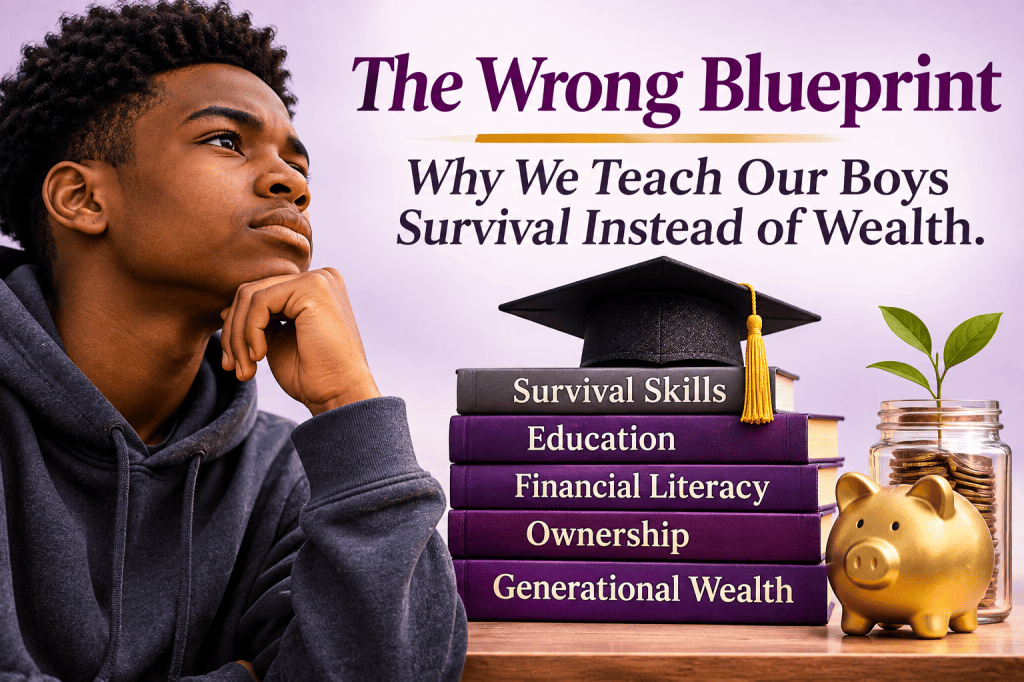
The Wrong Blueprint
Why We Teach Our Boys Survival Instead of Wealth
Financial knowledge, trusted mentors, and visible opportunities can help young people imagine a future they can work toward.
In nursing, we often meet people after something has gone wrong. We treat an injury, respond to a crisis, or help a family through a loss. Those moments have made me think about what support might have helped long before anyone reached a hospital.
I think especially about our boys. We tell them to make good choices and stay away from gangs, drugs, and violence. Those warnings matter. But a warning is not a plan for the future. A young person also needs someone who will listen, teach them what they do not know, and help them see opportunities within reach. Some are born into it, and that’s all they know.
As a mother, I want my sons to know that their lives are worth more than the dangers I worry about. I want them to understand money, recognize when people may be using them, and know where to turn for guidance. I want that for other boys in our communities, too.
Show Them How a Future Is Built
Financial literacy is one practical place to begin. Young people can learn how to make a budget, use a bank account, understand interest, and recognize the long-term cost of debt. They can learn what a credit report records, why it matters, and how to correct mistakes on it.
We should teach these skills without pretending that information alone removes every obstacle. A good credit score cannot replace affordable housing, a decent wage, or access to opportunity. Still, understanding how financial systems work gives a young person more tools to make decisions and ask informed questions.
Those lessons become more meaningful when boys can see adults putting them into practice. A conversation with someone who owns a business, works in a trade, manages a household budget, or took an unexpected path through education can make an unfamiliar possibility feel real. Success has many forms. Our boys deserve to see more than one.
Be Someone They Can Come To
Information matters, but so does the relationship in which it is offered. A boy who makes a mistake needs an adult who can hold him accountable and still believe he has a future. He needs room to ask a question without being embarrassed for what he does not know.
Families cannot do all of this alone. Coaches, teachers, neighbors, employers, faith communities, and local organizations can offer steady guidance and opportunities to learn. Mentorship should mean showing up consistently, helping a young person take a concrete next step, and staying interested in who he is becoming.
That includes taking his concerns seriously. If a boy says he feels unsafe, pressured, or hopeless, he needs more than a lecture about better choices. We need to hear what is happening and help him find support.
Start Before the Crisis
Healthcare speaks often about prevention. We should bring that same commitment to the communities our patients return to. Teaching financial skills, connecting young people with mentors, and creating safe places to learn will not solve every hardship. They are worthwhile ways to stand beside our children before a crisis brings them through our doors.
I want us to ask a different question of our boys. Alongside “What trouble should you avoid?” let us ask, “What future do you want, and who will help you build it?”
The tragedy isn’t just that gangs and drugs are introduced early; it’s that they are introduced as the only visible pathway to wealth and status. When a young boy believes that financial freedom can only be achieved through systemic traps, his potential is hijacked before it can ever take root.
He puts up an armor of composition and survival—very much like the forced emotional walls we see in overextended clinicians, just to manage the constant threat of fight-or-flight living.
The Knowledge Gap: Finance vs. Survival
Generational wealth doesn’t fail in our communities because of a lack of ambition; it fails because of an intentional systemic information gap.
- The Street Economy is Accessible: The mechanics of the street are visible on almost every corner, marketed through media, and aggressively pushed by peers.
- Financial Literacy is Gatekept: Concepts like debt-to-income ratios, compound interest, investment portfolios, and leveraging credit scores are treated like advanced secrets rather than foundational survival tools.
When a young boy isn’t taught that a clean credit score can buy property more efficiently than cash from an illicit trade, he naturally defaults to what he can see. We have to make financial literacy louder, more attractive, and more accessible than the visual temptations of the street.
Enlightening Our Children, Protecting Our Boys
If we want to change what our boys choose, we have to expand what they can see. This isn’t about telling them to “work harder” within a broken framework—it is about arming them with the institutional tools required to beat the system legally.
Introduce Financial Literacy Early
We must treat credit education and budgeting as non-negotiable rites of passage. Teach our boys that true ownership isn’t a depreciating luxury vehicle; it is an appreciating asset. Show them how money works behind the screen of a bank app, not just how it looks in a hand.
Decouple Success from the Street Blueprint
We need to actively dismantle the myth that power and luxury require violence or illegal trades. We must flood our boys’ environments with visible, accessible examples of men from their own communities who built substantial, thriving lives through technology, real estate, finance, and trade ownership.
Move from Survival to Legacy Building
Just as we advocate for structural shifts inside hospital staffing to protect clinical sanity, we must advocate for structural mentorship networks in our neighborhoods. Our boys need spaces where they can let down their armor, ask questions, learn from mistakes, and see a future that extends past their twenties.
Reclaiming the Narrative
It is time to give our children a new blueprint. Let’s teach them to build, to invest, and to survive using the power of their minds, their credit, and their community.

